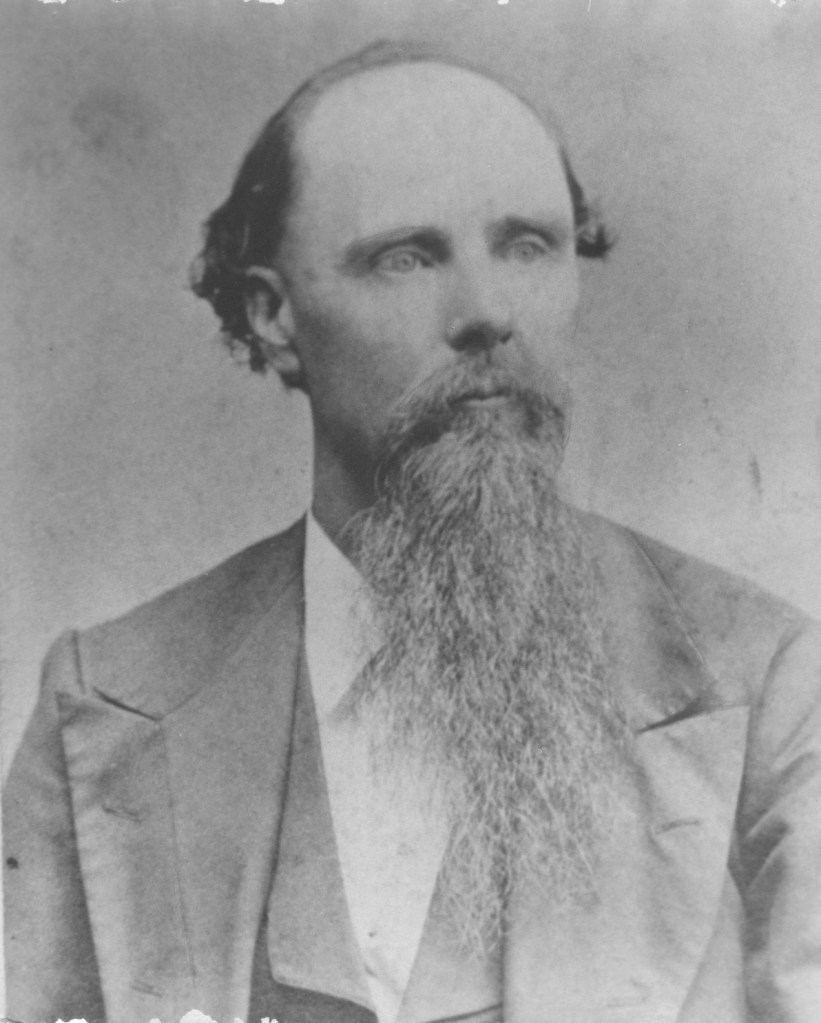
David Terrell Duncan was born on June 22, 1833 in Rabun County Georgia. He was the first-born son of Daniel Duncan (age 33) and Artemisia Collins (age 23).
According to Duncan/Cammonade family history, David’s father Daniel was a blue-eyed, red-haired, freckle-faced Scotch-Irishman who rode a pony into Rabun County Georgia from Oconee County, South Carolina. Gold had been discovered in North Georgia mountains and by 1831 there was a rapid influx of prospectors and settlers into Rabun County. This culminated in the Indian Removal Act of 1830 and the beginning of the 1838 Trail of Tears. Daniel obtained 1600 acres of land from the Indians (either by trading the pony or via the land lottery). In 1836, Daniel Duncan’s tax record shows a total of 980 acres of land. The land was located at the foot of a large mountain which he named Duncan Mountain (now Duncan Bald).
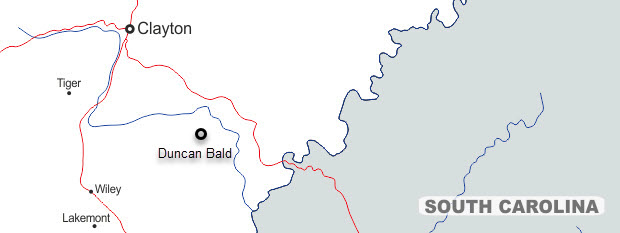
As Artemisia Collins was born somewhere in South Carolina, we can assume that this is where David’s parents met and married. However, we do not have these records, nor can we be sure where Daniel and Artemisia’s family originated.
The 1840 Census for Rabun County Georgia, Militia District 436 shows that Daniel Duncan has a household consisting of 6 free white persons including himself (age 40-50, we think he was born about 1800), a son between 5-10 years old (this is David Terrell Duncan) and a son under 5 (John Duncan, born in 1835). David’s mother, Artemisia Collins Duncan (female 30-40, she was born about 1810), a daughter between 5-10 (Jane A Duncan Connelly, born around 1830) and a daughter under 5 (Rebecca Emeline Duncan Williams, born in 1837).
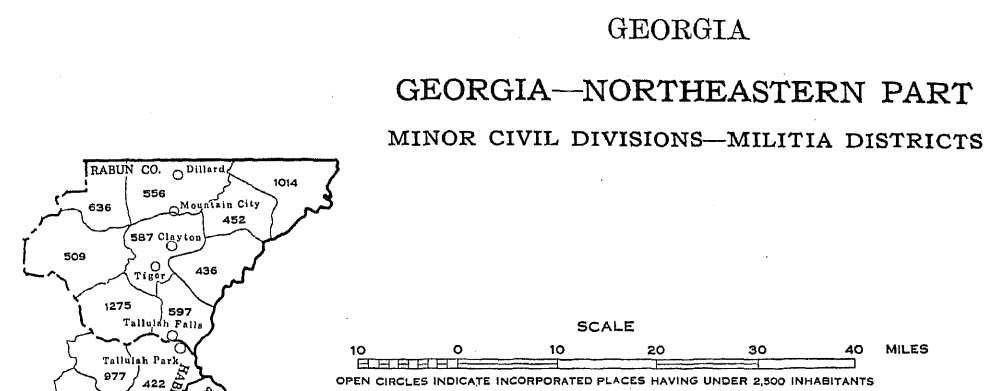
The 1850 Census for Rabun County Georgia, Militia District 436 shows that Daniel Duncan is a farmer. The real estate is worth about $1,000. Daniel is 50 years old and born in South Carolina. His wife, Artemisia is 40 and also born in South Carolina. Jane E is 20. David is 18 and also a farmer. John is 15 and a farmer. Emeline Rebecca is 12, William W Duncan is 9, Daniel Jefferson Duncan is 7, Dennis Dodderidge Duncan is 4 and born in South Carolina for some reason. Deavers is only 1. The census also states that 1 was married within the year (Jane married Charles Connelly in December 1850) and 3 attended school (probably Rebecca, William and Daniel Jr.).
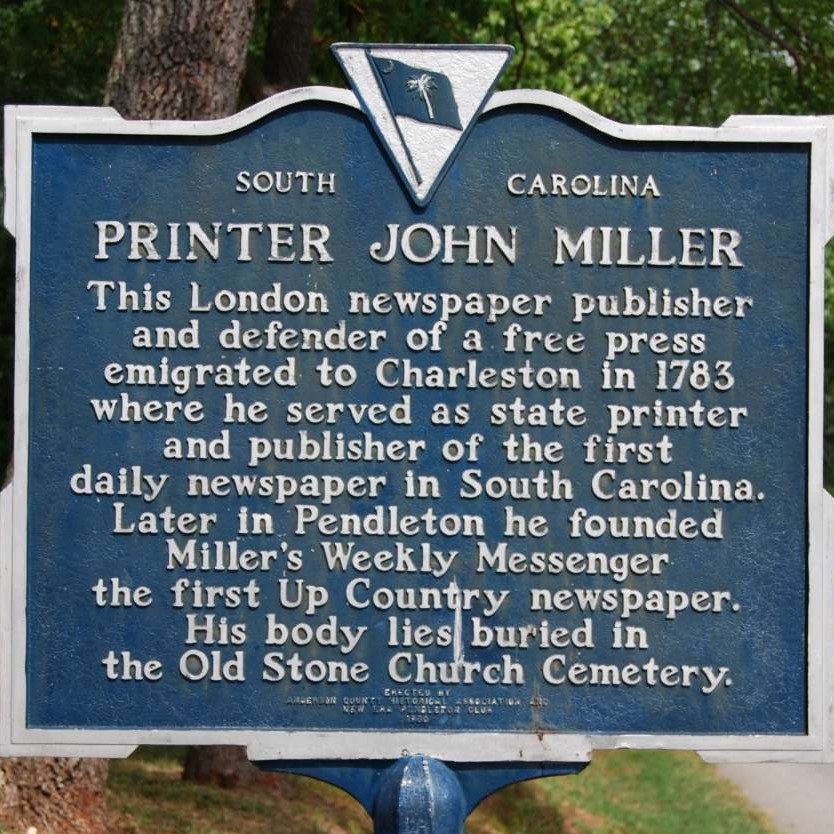
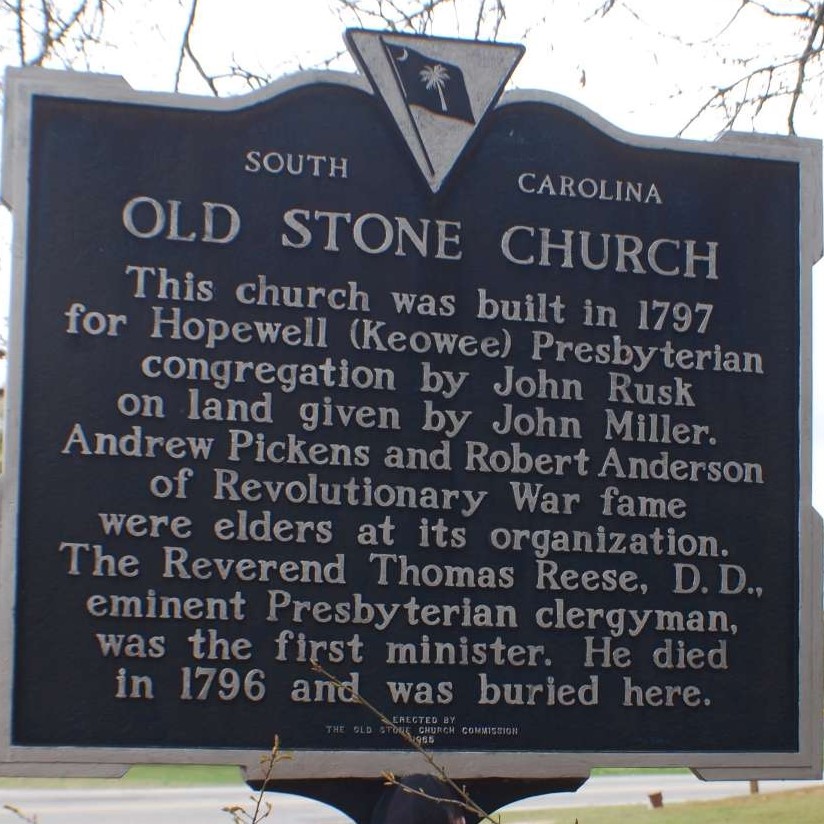
According to the 1900 Census, David Duncan married Jane Veronique Caminade in 1857. David was 24 and Jane 17 years old. Jane was from Pendleton, SC and Baby Mary was born at the end of November 1857 in South Carolina. I am not able to find any marriage documents in either South Carolina or Georgia. And we don’t know how the two met, but Williamston SC and Persimmon, GA are only about 50 miles apart. David’s brother Dennis will marry Jane’s sister Sarah Rebecca. Jane and Rebecca were great grand-daughters of the Printer John Miller who is buried at Old Stone Church, Clemson College, South Carolina. Miller left London, England after several of his articles landed him in jail. Miller’s Weekly Messenger was established Jan 16, 1807 by John Miller. When Miller died, his son continued publishing the paper in 1812 when its name was changed to the Pendleton Messenger. The Messenger was published until June 1858 when it was sold to the Anderson paper.
In the 1860 Census, David Duncan (age 27) and Jane Caminade Duncan (age 24?) have three children. Mary Duncan Cannon is 2, Elizabeth A Duncan is 1 and baby Daniel Ira Duncan is one month old. Militia District 436 has been named Persimmon, GA. Elizabeth and the baby were born in Georgia. According to the U.S. Selected Federal Census Non-Population Agriculture Schedule from 1860, David T Duncan had 60 acres of improved land and 1040 of unimproved land, with a cash value of $1,500. The value of farming instruments and machinery was $100. Livestock included 1 horse, 1 milch cows, 1 working oxen, 3 other cattle, 23 swine, value of livestock $200. He produced 100 bushels of Indian corn, 12 bushels of Irish potatoes, 25 bushels of sweet potatoes, value of orchard products $75, 20 pounds of butter, and the value of animals slaughtered was $45. He would have been a rich man at the time.

January 19, 1861 Georgia joins South Carolina, Florida, Mississippi and Alabama in seceding from the Union. The state soon joined the Confederate States of America.
August 21, 1861 David’s brother William W Duncan enlists in 24th Regiment Georgia Infantry, Company E, The Rabun Gap Rifleman. Three days later on August 24, 1861 their brother John Duncan also enlists in the same regiment. In September the regiment is attached to Coast Defense for the Department of North Carolina. In 1862, they are attached to Cobb’s Brigade and moved to Virginia. Here they participated in battles from the Seven Days Battle, Battle of Malvern Hill, Battle of Harper’s Ferry, Battle of South Mountain (where 126 of the 292 men were killed) and the Battle of Sharpsburg/Antietam. October 29, 1862 brother Daniel J Duncan enlists and joins the same Regiment. William appears on a register for Winder Div 3 Hospital in Richmond, Virginia where he is returned to duty on Nov 28, 1862. Interestingly enough, his brother John is detailed as a nurse at Camp Winder in Nov 1862. After this, there are no additional records for William. His regiment went on to participate in the Battle of Fredericksburg, Battle of Chancellorsville and the Battle of Gettysburg. Family history says that William never returned. In June 1863, John Duncan is listed as mustered at the Confederate Hospital in Huguenot Springs, Va. In May and June 1864, John is on furlough. On August 16 1864, John is captured at the Battle of Guard Hill in Front Royal, VA. By August 21, he is listed as a Prisoner of War at Old Capital Prison in Washington, DC. On August 28, he is sent to Elmira Prison, NY. The inmates called this prison “Hellmira”. During the 12 months it was open, 12,100 prisoners died from a combination of malnutrition, continued exposure to harsh winter weather and disease from the poor sanitary conditions. John Duncan died on Nov 14, 1864 of typhoid pneumonia. The dead from Elmira Prison were buried at what is now Woodlawn National Cemetery. Sergt. J. Duncan is in plot 813 of the Confederate section. At the Battle of Cedar Creek (October 19, 1864), Daniel J Duncan is taken prisoner in Strasburg, VA. He is transferred to Lookout Point, MD October 24, 1864.
D T Duncan, age 30 years and 7 months, a farmer born in Georgia is listed in the 40th Senatorial District, 436th Militia District of Rabun County. The 1864 Census for Re-organizing the Georgia Militia was a statewide census of all white males between the ages of 16 and 60 who were not at the time in the service of the Confederate States of America. Based on a law passed by the Georgia Legislature in December 1863 to provide for the protection of women, children, and invalids living at home, it is a list of some 42,000 men–many of them exempt from service–who were able to serve in local militia companies and perform such home-front duties as might be required of them.
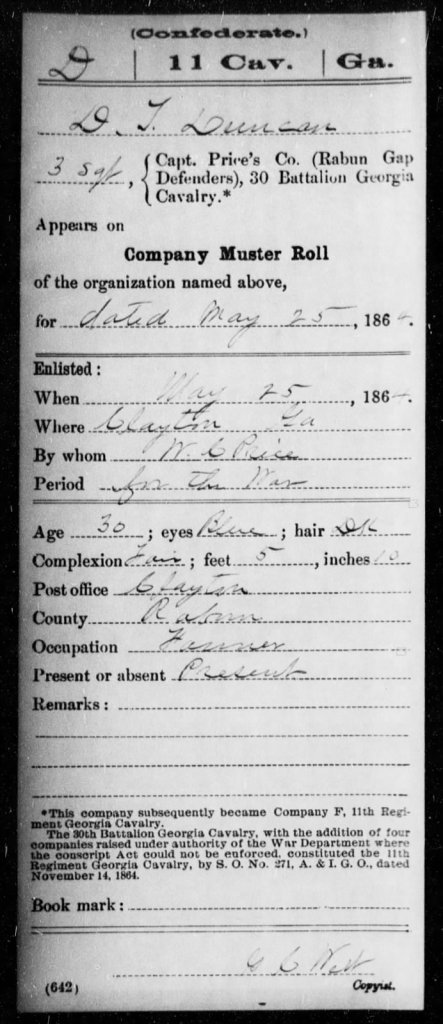
At this point in time, David’s brother William is missing, brother’s John and Daniel are in Virginia and both are about to be captured. And on May 25, 1864 David Terrell Duncan enlisted in Company F, 30th Battalion Georgia Cavalry from Clayton, GA as a Sergeant for the duration of the war. They were called the Rabun Gap Defender’s. D T Duncan is listed as 30 years old, 5’ 10” tall, dark hair, blue eyes with a fair complexion. He was issued his Confederate uniform on September 30, 1864. This company subsequently became Company F, 11th Regiment Georgia Cavalry.
11th Cavalry Regiment, in November 1864 was assigned to the Department of South Carolina, Georgia, and Florida, and served in M.W. Hannon’s and R.H. Anderson’s Brigade. It fought at Savannah, but many of the men were captured. In February, 1865, only 90 effectives were present and in April most of these were captured at Macon. Colonel Andrew Young, Lieutenant Colonel H.W. Barclay, and Major Madison Bell were its commanders.
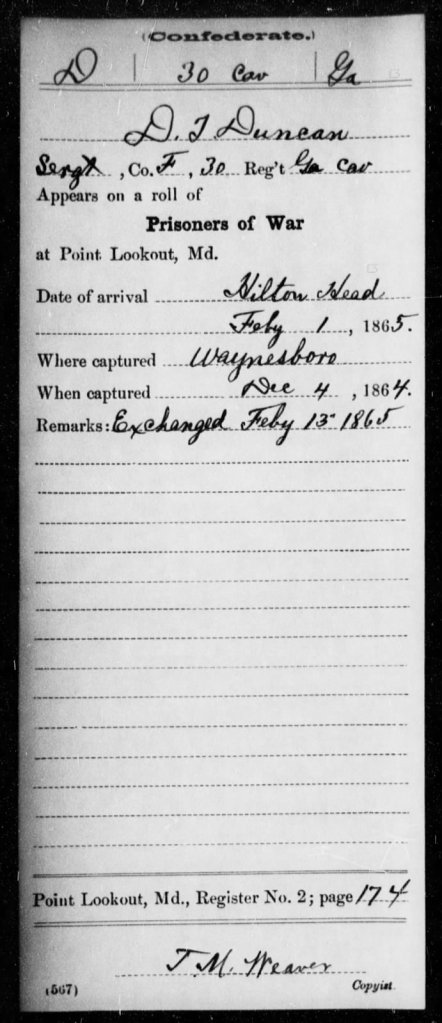
On December 4, 1864 D. T. Duncan was captured at The Battle of Waynesboro in eastern Georgia, towards the end of Sherman’s March to the Sea. He was captured by the 3rd Cavalry Division and turned over to the Provost Marshal in Savannah
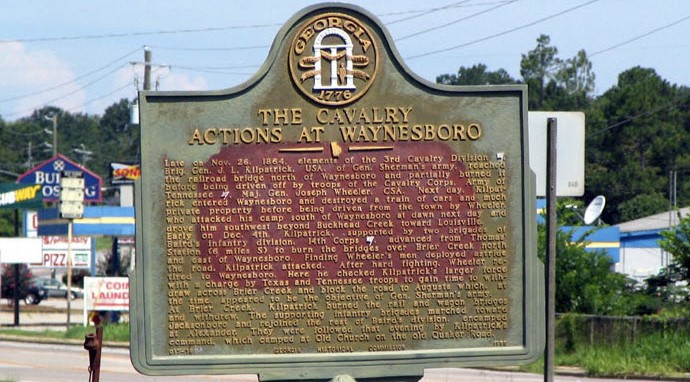
At the Battle of Waynesboro, Union cavalry forces under Brig. Gen. Judson Kilpatrick defeated Confederate cavalry led by Maj. Gen. Joseph Wheeler, opening the way for William T. Sherman’s armies to approach their objective, Savannah.
As Sherman’s infantry marched southeast through Georgia, his cavalry under Judson Kilpatrick rode northeastward. In the late afternoon of November 26, 1864, elements of Kilpatrick’s 3rd Cavalry Division had reached the wooden railroad bridge north of Waynesboro, Georgia, and partially burned it before being driven off by troops dispatched from the Cavalry Corps of the Army of Tennessee by Joseph Wheeler. After the numerically inferior Confederates withdrew, Kilpatrick entered Waynesboro the next day and destroyed a train of cars and much private property before being driven from the town by Wheeler. At dawn on November 28, Wheeler suddenly attacked Kilpatrick’s camp south of Waynesboro and drove him southwest beyond Buckhead Creek toward Louisville.
Annoyed by Wheeler’s constant harassment, Kilpatrick set out on the morning of December 4 with his full division to attack Waynesboro and finally destroy Wheeler’s small command. Early in the morning, Kilpatrick, now supported by two infantry brigades dispatched from Baird’s division of the XIV Corps, advanced from Thomas’s Station six miles northward to burn the bridges over Brier Creek north and east of Waynesboro.
Finding Wheeler’s Confederates deployed astride the road, Kilpatrick attacked, driving the Confederate skirmishers in front of them. The Union force then came up against a strong defensive line of barricades, which they eventually overran. As the Union advance continued, they encountered even more barricades that required additional time to overcome. After hard fighting, Wheeler’s outnumbered force retired into Waynesboro and another line of barricades hastily erected in the town’s streets. There, Wheeler ordered a charge by Texas and Tennessee troops in order to gain time to withdraw across Brier Creek and block the road to Augusta, which, at the time, appeared to be the objective of General Sherman’s army. After furious fighting, the Union troops broke through and Wheeler’s force hastily withdrew.
Finally reaching his objective of Brier Creek, Kilpatrick burned the rail and wagon bridges and withdrew. The supporting infantry brigades marched toward Jacksonboro and rejoined the rest of Baird’s division, encamped at Alexander. They were followed that evening by Kilpatrick’s command, which camped at Old Church on the old Quaker Road. Additional fighting over the next few days enabled Sherman to close in on Savannah. Sherman’s armies captured the port of Savannah on December 21, 1864.
David Terrell Duncan and his brother Daniel J Duncan were held as prisoners of war at Point Lookout, Maryland. They were paroled from Point Lookout and appeared on a muster role at Camp Lee near Richmond, VA in 1865 (probably January).
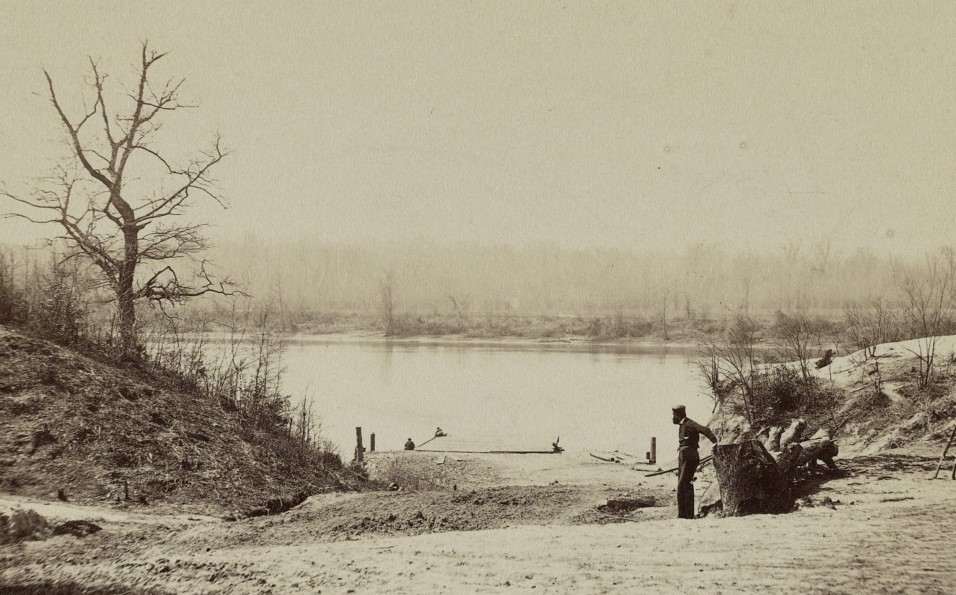
The returning Confederate POWs were offloaded at Cox’s Wharf (Landing) and walked, or were hauled by wagon, via local roads through the Union lines to Boulware’s Wharf on the James River between the lines. The distance was described as being about 4 miles. Here they were placed aboard Confederate river steamers and taken up to Richmond. Those not obviously able bodied were examined at the Receiving and Wayside Hospital (General Hospital No. 9) in Richmond to determine if they needed further medical care and attention. Those deemed to be able bodied were sent to Camp Lee on the western outskirts of Richmond to receiving fresh clothing and await their declaration of exchange. Declared exchanged, they were returned to duty with their units in the field. Those men needing further medical attention were sent to military hospitals in the Richmond area. Those unfit for duty but able to travel were furloughed home in the status of paroled prisoners of war.
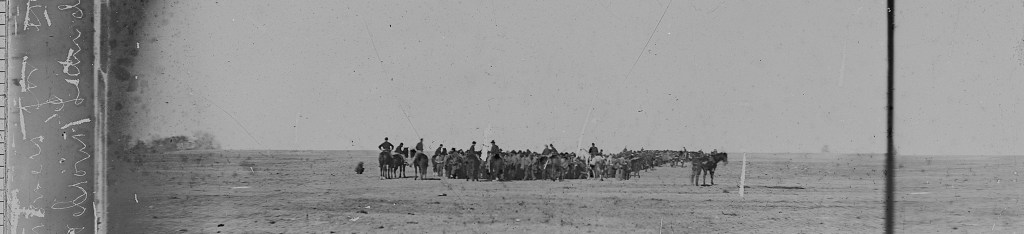
The exchange process was actually a three-step process. The prisoner selected for exchange was first “paroled for exchange” meaning that he personally promised not to take up arms until properly exchanged. A parole is a sworn personal promise. The second step was “delivery” meaning that the prisoner was handed over to his own side as a “paroled prisoner of war”. The third step was supposed to be a formal (proper) declaration of exchange resulting from an official accounting process between the two sides. This accounting process got rather sloppy in the last year of the war. The Confederates continued to play the game and only declared exchanged those who could immediately return to duty and rejoin their units. The Union continued to ignore this nicety which was a holdover from the Dix-Hill Cartel. The Federals presumed that all released Confederate prisoners were forced back into the ranks, hence the adaptation of the “likely to be unfit for 60 days” selection rule.
David T Duncan arrived at Hilton Head, SC on Feb 1, 1865. Both David and his brother Daniel were part of 2,051 Confederate prisoners transferred for exchange on Feb 13, 1865. It is not known how or exactly when they returned to Rabun County.
Baby Ella is born in March 1865. While the Civil War lasted for 4 years, Jane and David were separated for less than a year.
On April 9, 1865 General Robert E. Lee surrendered his Confederate troops to the Union’s Ulysses S Grant at Appomattox Court House, Virginia, marking the beginning of the end of the American Civil War.
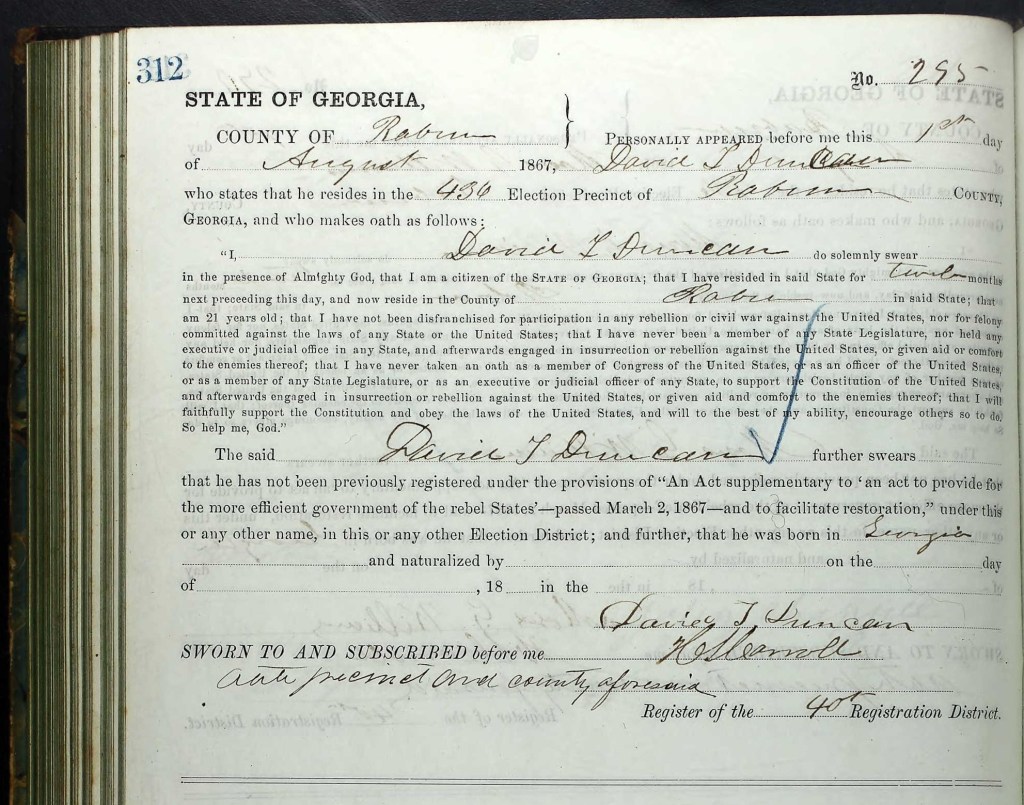
The Reconstruction Acts of 1867 required Southern states to ratify the 14th Amendment, draft new state constitutions, and register voters, both black and white. In order to vote, men had to swear an oath of allegiance to the United States, and some were disqualified for their participation in Confederate government posts. On August 1st, 1867 David T Duncan took the oath of allegiance to the United States. He is entered in the Georgia, U.S., The Returns of Qualified Voters and Reconstruction Oath Books in book 2 page 312, precinct no 436, Rabun County for the 40th election district.
The 1870 Census (taken on August 10, 1870) shows that David (now 37) and Jane (now 36), Mary is 12, Elizabeth is 11, Daniel is not listed and presumed that he died as a child. However, there are 5 additional children, all born in Georgia. Rebecca is 8, Ella is 5, William H is 3, Eliza Jane is 2 and baby Susan H is 1. David is a farmer with $300 in personal property. David’s mother Artemisia lives next door with 2 of David’s brothers: Jefferson and Devers. Also living with Artemisia is her granddaughter, Susan. The land value of the real estate in Artemisia’s name is $1,000 (apparently, most of the Duncan land was transferred to Artemisia during the Civil War). David’s brother Dennis and his family live on the other side of Artemisia. All are listed as farmers or farm laborer.
From 1873-1874 David is the representative of Rabun County to the General Assembly of Georgia. This is also known as the Georgia State Legislature, the House of Representatives met in Atlanta.

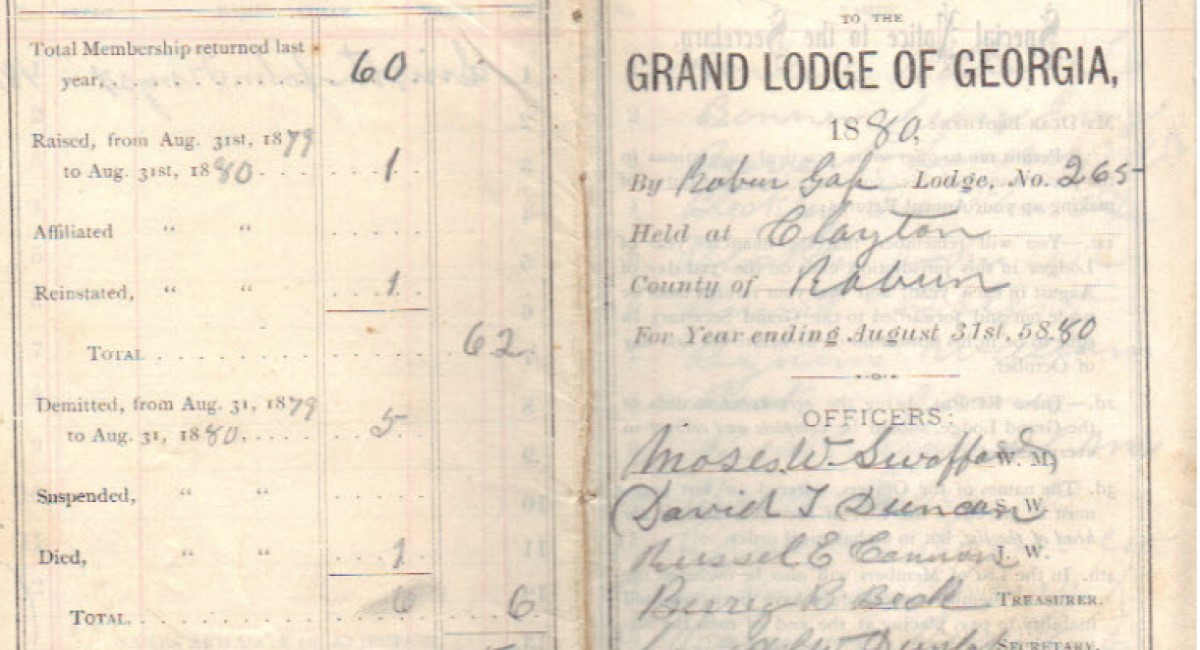
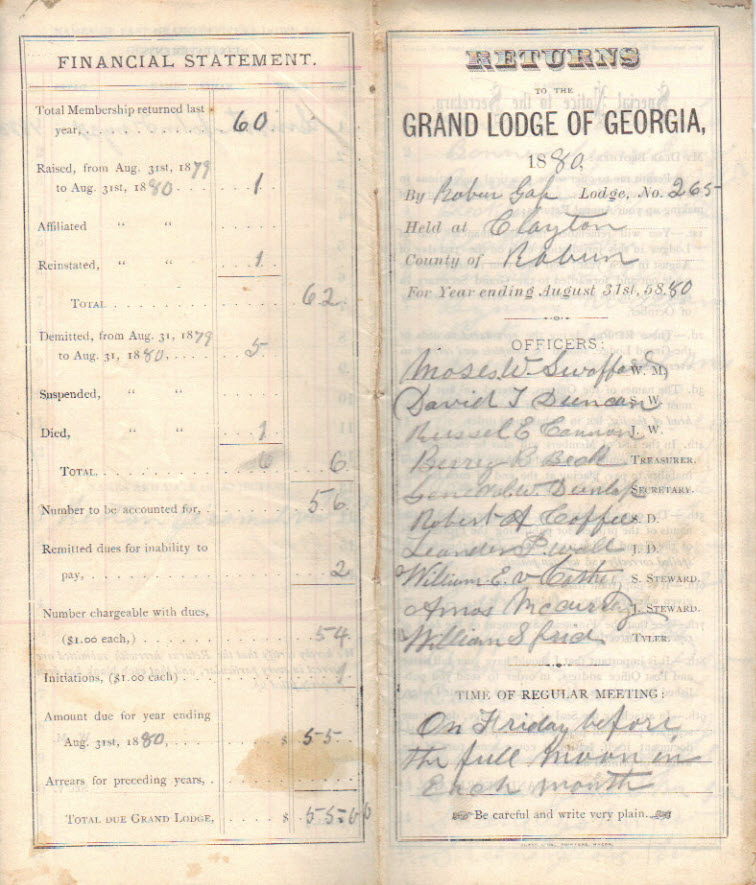
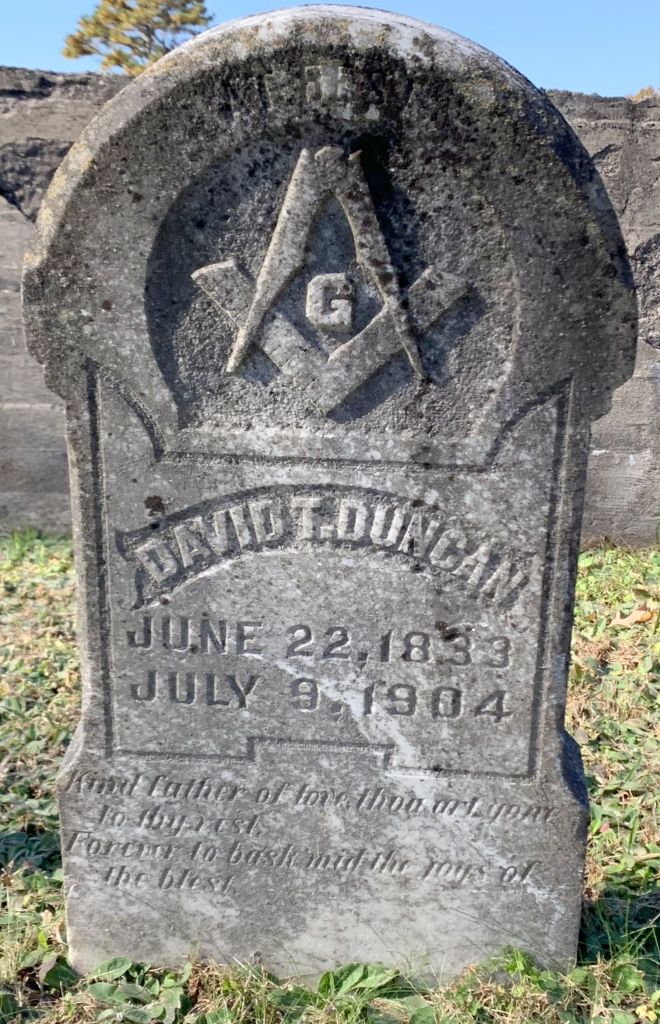
David is also a member of the Rabun Gap Masonic Lodge No. 265 and in 1880 he is listed as the Senior Warden of the Lodge.
At the time of the 1880 Census, David’s occupation changes to hotel keeper (he is now 46). Living in his household are Jane V (age 45), Mary (age 22) is now a teacher, Lizzie A (Elizabeth is 21), Rebecca A (age 17), Ellen (Ella is 16), William H (age 14), Liza (Eliza Jane is 13), Henrietta (Susan H is 10). There are also three more daughters: Florence K (age 8), Ida (age 5) and Effie (age 4). Daniel J. Duncan (30), David’s brother and Raleigh Cannon (22), are also living in the house.
David and Jane’s last child, Haralson Earl Duncan, is born on August 8, 1881. David is 48 and Jane is 46. They had 12 children, in total, over 23 years.
Raleigh Cannon (Hiram R. Cannon) will marry David and Jane’s oldest daughter Mary in 1882. Raleigh will go on to own and run a string of successful hotels in Georgia and South Carolina. This includes several hotels of lesser significance, the Cecil Hotel on the corner of Luckie and Cone in Atlanta (currently a Holiday Inn Express & Suites), The Hotel Georgian in Athens (now The Georgian condos and event space), The John C. Calhoun Hotel in Anderson, South Carolina (The Calhoun is now loft apartments) and The Henry Grady Hotel in Atlanta, which was located where the Westin Peachtree Plaza is now located.
In the meantime, David, Daniel and Raleigh are managing the Blue Ridge Hotel in Clayton. The hotel was located on Clayton’s North Main Street. It was originally built by A.M. Mauldin and his brother-in-law William Crane between 1858 and 1862 as a log trading post. David’s family operates the establishment until selling out to his daughter and son-in-law Raleigh and Mary Cannon in about 1890? Raleigh sells the hotel to his cousin J.H. Cannon and his wife Celia in 1916. The hotel was torn down in 1949.

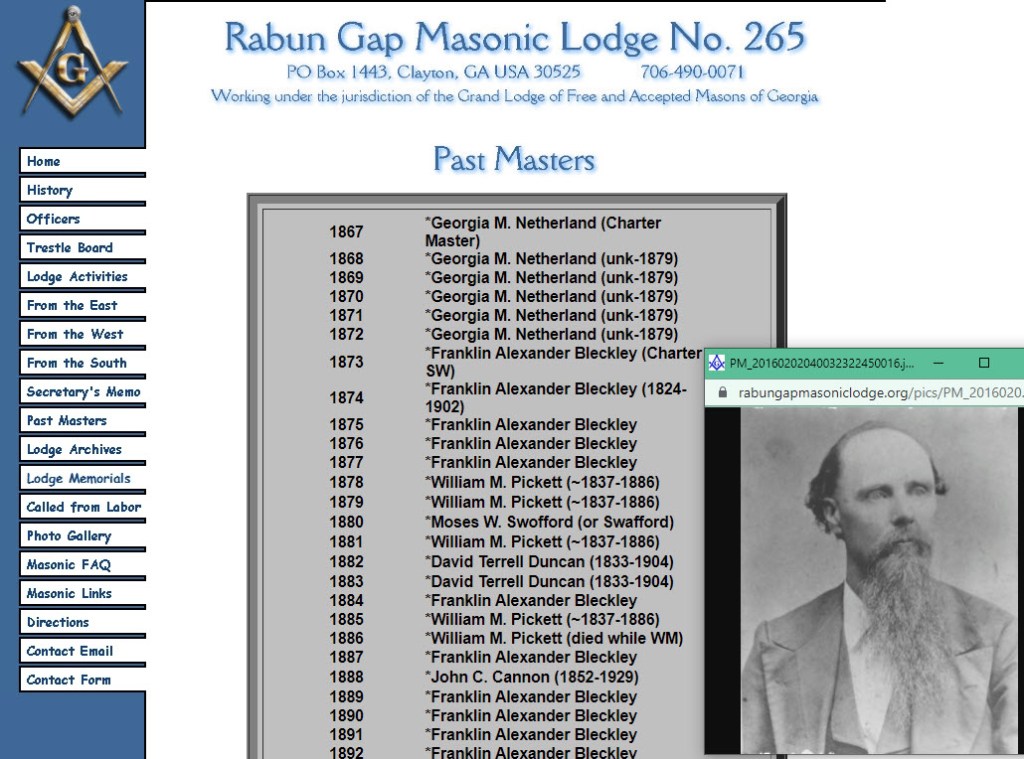
David Duncan becomes the Grand Master of the Rabun Gap Masonic Lodge No. 265 for both 1882 and 1883.
1890 US Census was destroyed in a fire and there are no records for David T Duncan available.
In the 1900 Census David is 66, Jane is 65, Lizzie is 41, Eliza J is 33, Ida is 25, Effie A is 24 and there is another son Haralson E. aged 18. Haralson Earl will later be known as Harry Duncan. There is also a housekeeper named Lavinia M aged 18.
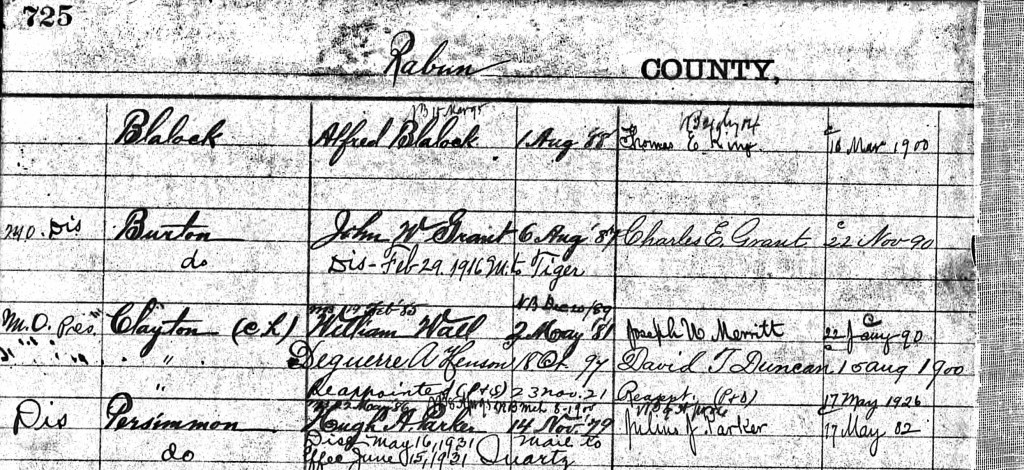
On August 15, David is named Postmaster for the Clayton post office in Rabun County. He stays in this position for 1900, 1901 and 1902.
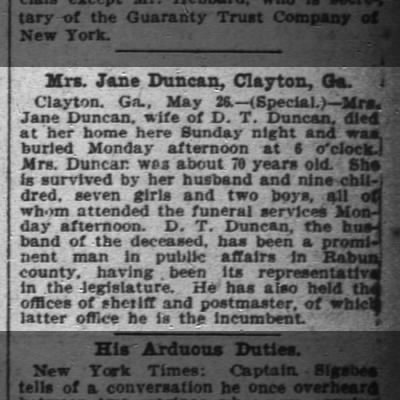
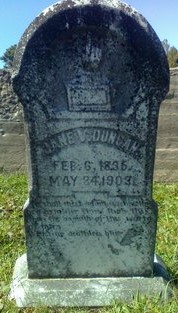
On May 24, 1903 David’s wife Jane passes away at age 68.
David Terrell Duncan dies on July 9,1904, at the age of 71, and is buried in the Clayton Baptist Church Cemetery. His headstone features a mason symbol and the epitaph, “Kind father of love thou art gone to thy rest forever to bask mid the joys of the blest”.
 Chance Objects